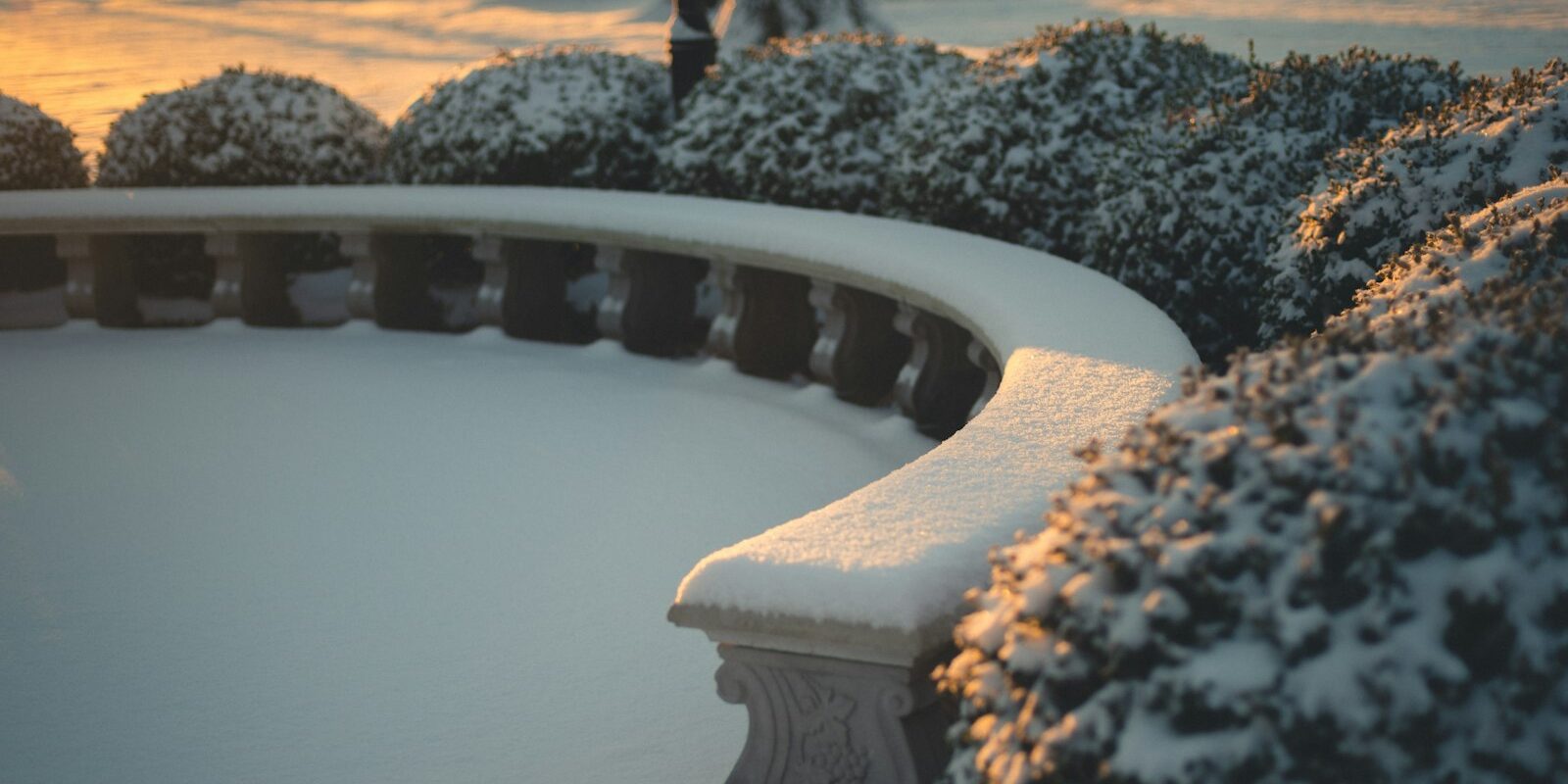
- Boxwood, holly, and rhododendron dry out on sunny, windy days once the ground freezes. A deep soak beforehand helps protect them.
- Water left in irrigation lines freezes and breaks pipes, valves, and heads. Shut the system down before a hard freeze.
- Keep mowing until the grass stops growing, and don’t let fallen leaves sit on the lawn all winter.
- Skip rock salt on paver walks and patios. Shovel first, use calcium chloride sparingly if you need a de-icer, and keep the slush out of your beds.
Because the ground hasn’t frozen yet. Frost on the lawn reflects the air temperature, and soil gives up its heat much more slowly. It’s the same reason patios can keep going in after the first frost. While the ground is open, roots still take up water, and the jobs that carry a yard through winter can still get done.
Wilmington averages about 19 inches of snow a season, most of it in January and February (National Weather Service). Much of the damage happens between storms, from sun and wind on frozen ground, salt on the walk, and hungry deer.
Yes, especially broadleaf evergreens. Boxwood, holly, rhododendron, and azalea keep their leaves all winter, and those leaves keep losing water on sunny, windy days. When the ground is frozen, the roots can’t replace it. Penn State Extension calls the result winter burn: browning leaves and, in bad cases, dead branches.
The fix is water while the ground is still open. University of Maryland Extension says to soak the soil several inches deep, then let it dry out between waterings. Delaware declared a statewide Drought Watch in June, so check the Delaware Climate Office for current conditions before you count on rain. Start with anything planted this year or last.
Anti-desiccant sprays are sold for this, but UMass Extension calls their performance “quite variable.” For a boxwood or holly in an exposed spot, especially a new planting, Penn State says a burlap screen can help: burlap on stakes about two feet out from the drip line, on the sides facing the wind, usually south and west.
Before the first hard freeze, and if yours is still running, now. Water left in the lines freezes and expands, and Colorado State University Extension lists what it breaks: pipes, fittings, valves, sprinklers, and pumps. The backflow preventer needs its own attention, with its valves left half open for the winter.
The University of Minnesota‘s turf program doesn’t recommend blowing out your own lines, since most home compressors can’t move enough air. It also suggests an insulating blanket over the backflow preventer. Shut-down, blow-out, and turn-on are part of our irrigation maintenance.
Mow to the right height and clear of leaves. Keep mowing as long as the grass is growing. The University of Minnesota says mowing until growth stops helps reduce snow mold, and that a lawn kept taller than three inches should be cut to about three and mowed at that height several times before winter, not just on the last mow.
Mulching leaves into the lawn works if 80 to 90 percent of the grass still shows afterward, Minnesota says. When the drop is heavier, the Delaware Livable Lawns calendar for November says to rake the leaves off, shred them, and spread them on your beds.
If your lawn gets one last feeding, Livable Lawns allows a light one in November: half a pound of nitrogen per 1,000 square feet of quick-release fertilizer. Under Delaware’s nutrient management rules, lawn care companies and other certified nutrient handlers can’t apply fertilizer from December 7 through February 15, or on frozen or snow-covered ground.
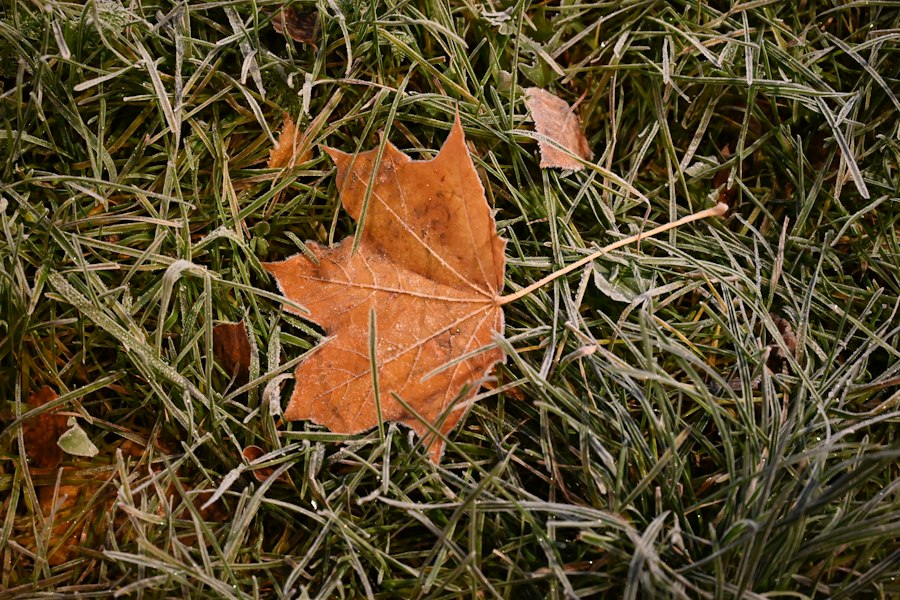
For perennial beds, after the ground freezes. If perennials need more protection than their own fallen leaves and stems, Iowa State Extension suggests about four inches over the crowns at that point. The mulch keeps freezing and thawing, pushing crowns out of the ground. Put down too early, it can delay dormancy, and it comes off in early spring.
Trees and shrubs need much less. The University of Maryland puts it at one to three inches, pulled an inch or two back from the trunk. Mulch piled against the bark holds moisture there and invites rot, pests, rodents, and disease.
Shovel first, salt lightly, and watch where the slush goes. Rock salt hurts plants two ways, according to UW–Madison Extension. Spray from the walk or the road gets into buds and evergreen leaves, and salt that washes into the soil binds up water so roots can’t take it in.
Pavers need their own plan. We recommend skipping rock salt on paver walks and patios. If you need a de-icer there, use calcium chloride sparingly, and never in place of shoveling.
Keep salty snow off the beds along the walk, and water those beds deeply in spring to flush out what got in.
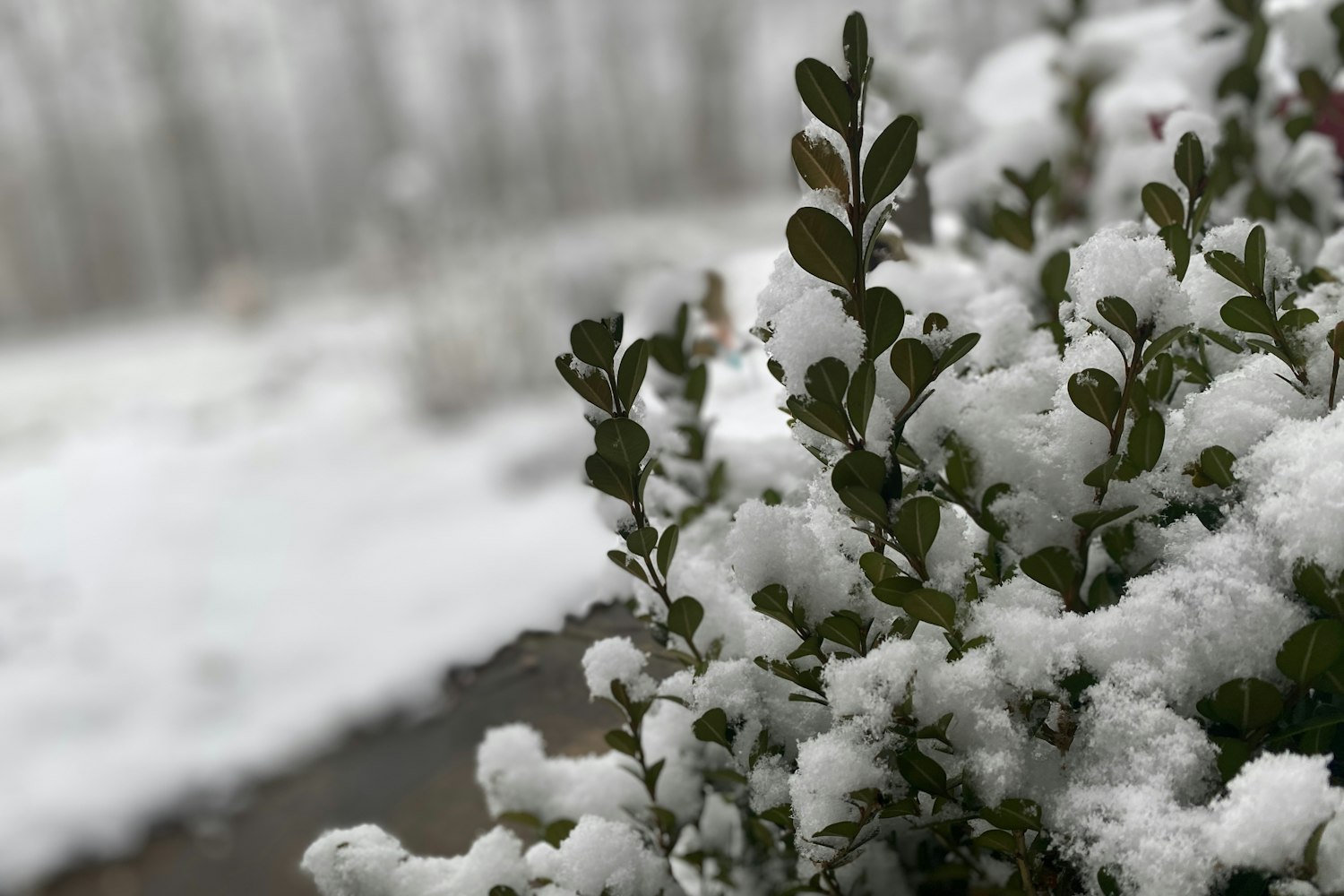
Brush heavy snow off evergreens with a broom, sweeping upward, so branches don’t split under the weight. Leave ice to melt on its own, as Iowa State Extension advises. University of Maryland Extension warns that iced branches may be more brittle, and knocking the ice off can do more damage than the ice.
Bucks rub their antlers on young trees in the fall, and University of Maryland Extension says repellents don’t stop it. Plastic tree wrap, tubes, or a four-foot cylinder of woven wire around the trunk does.
For our maintenance clients, much of this is already on the schedule. Our maintenance services cover leaf cleanups in November and December, pruning, and mulch, and irrigation shut-down and turn-on can be added.
Winter is also when spring projects get designed. A larger project usually runs two to three months from the first consultation to the start of work, so a patio, walkway, or planting plan you want done by May starts with a conversation in January or February.
Want a second set of eyes on your yard before the ground freezes, or a spot on our spring schedule? Call (302) 661-1950 or reach us at atlanticlandscapes.com/contact, and we’ll come walk it with you.
When should you winterize a sprinkler system in Delaware?
Before the first hard freeze, which in Wilmington averages around mid-November. If yours is still on, shut it down and have the lines blown out now.
Should you water evergreens before winter?
Yes, until the ground freezes. A deep soak during dry stretches helps boxwood, holly, and rhododendron hold up against winter burn.
How short should the last mow of the year be?
About three inches is a common target, per University of Minnesota turf guidance. Keep mowing until the grass stops growing, and mow at that height several times, not just the last time.
What’s the best de-icer for a paver walkway or patio?
Skip rock salt on pavers. Shovel first, and if you need a de-icer, use calcium chloride sparingly and keep the slush out of nearby beds.
When should winter mulch go down?
After the ground freezes. Where perennials need extra protection, about four inches over the crowns keeps them from heaving, while trees and shrubs need only one to three inches, kept off the trunk.