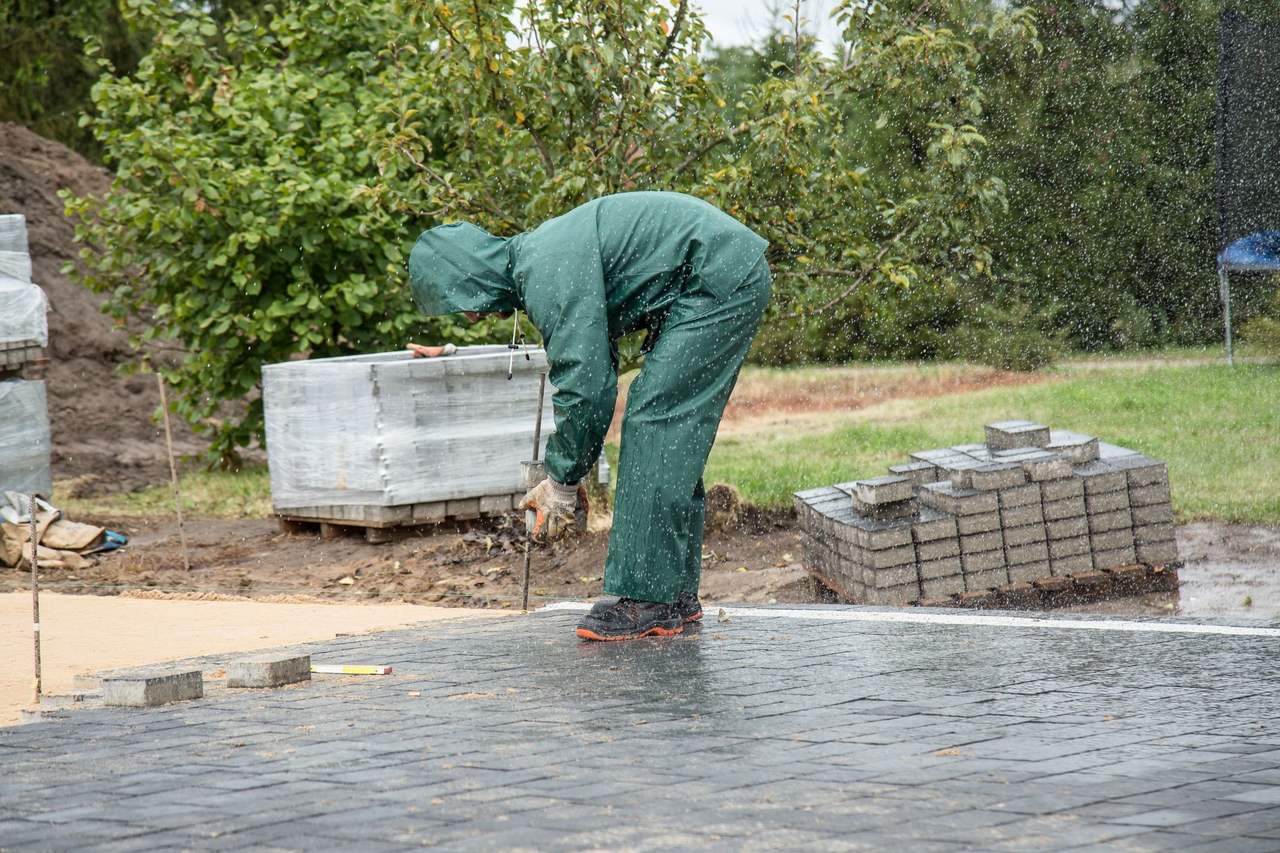
- Frozen or soaked ground stops a patio build. Cold air doesn’t, and soil holds its heat after the air cools.
- A paver patio has no footing, so New Castle County’s 32-inch frost depth doesn’t apply. A drained, compacted stone base keeps it from heaving.
- North of Kirkwood Highway, the ground tends toward clay, which holds water and heaves, so patios there usually need a deeper base.
- A patio that goes in this fall or early winter is ready the first warm weekend of spring.
Yes. Spring gets called patio season, but fall and early winter are good months to build here, as long as the ground isn’t frozen or soaked.
PJ, who handles new projects for us, says we can typically keep building through the end of January before the ground freezes, and in a mild winter we’ve worked straight through. The Concrete Masonry & Hardscapes Association, the paver industry’s trade group, puts the limit in the same place. Its installation guide rules out laying anything on frozen ground, using frozen stone, or using sand that’s frozen or soaked.
Frost on the lawn is the wrong signal. In a typical year, Wilmington’s first freeze comes around November 1, and the first hard freeze, 28 degrees, around November 14 (NOAA). Both are air temperatures. Soil lets go of its summer heat slowly, which is the same reason fall is Delaware’s better planting season.
Concrete and mortar are where cold adds work, since both need protecting below 40 degrees while they cure. A dry-laid paver patio, set in sand and stone with no mortar, doesn’t have that problem. We do watch the forecast for one step. The polymeric sand needs a dry stretch above freezing to harden. If it’s too cold that day, it’s the first thing we come back to finish once the temperature allows.

No. A fall-built patio holds up through winter as well as a spring one, as long as the base under it is right.
Frost heave is the ground pushing a patio up as it freezes. It needs fine soil like silt or clay, water held in that soil, and a freeze that reaches down into it, all at once. Clean sand and gravel that drain freely barely heave at all.
We dig out the soft soil, bring in crushed stone, and compact it in layers. Then the surface gets a slight slope so rain runs off instead of soaking in. The association’s minimum is 1.5 percent, about three-sixteenths of an inch per foot.
A little settling is normal for any paver surface. More than that usually comes back to stone that wasn’t compacted well enough, and that can happen in April as easily as in November.
No. Decks need frost footings, which is probably where the idea comes from. In New Castle County, deck footings go at least 32 inches below ground, the frost depth in the county’s building code. That depth is for things that carry weight on posts or walls.
Pavers work differently. They sit on a thin layer of sand over compacted stone, locked in at the edges. The joints let the surface give a little as the ground moves, so it doesn’t crack. The association’s minimum base under a patio is four inches of compacted stone over well-drained soil, and more on wet or weak ground.
Stone mortared onto a concrete slab is rigid, and freezing and thawing is hard on mortar joints. A mortared seat wall or fire feature needs its own footing below the frost line. For most patios around Wilmington, we lean toward dry-laid pavers or stone.
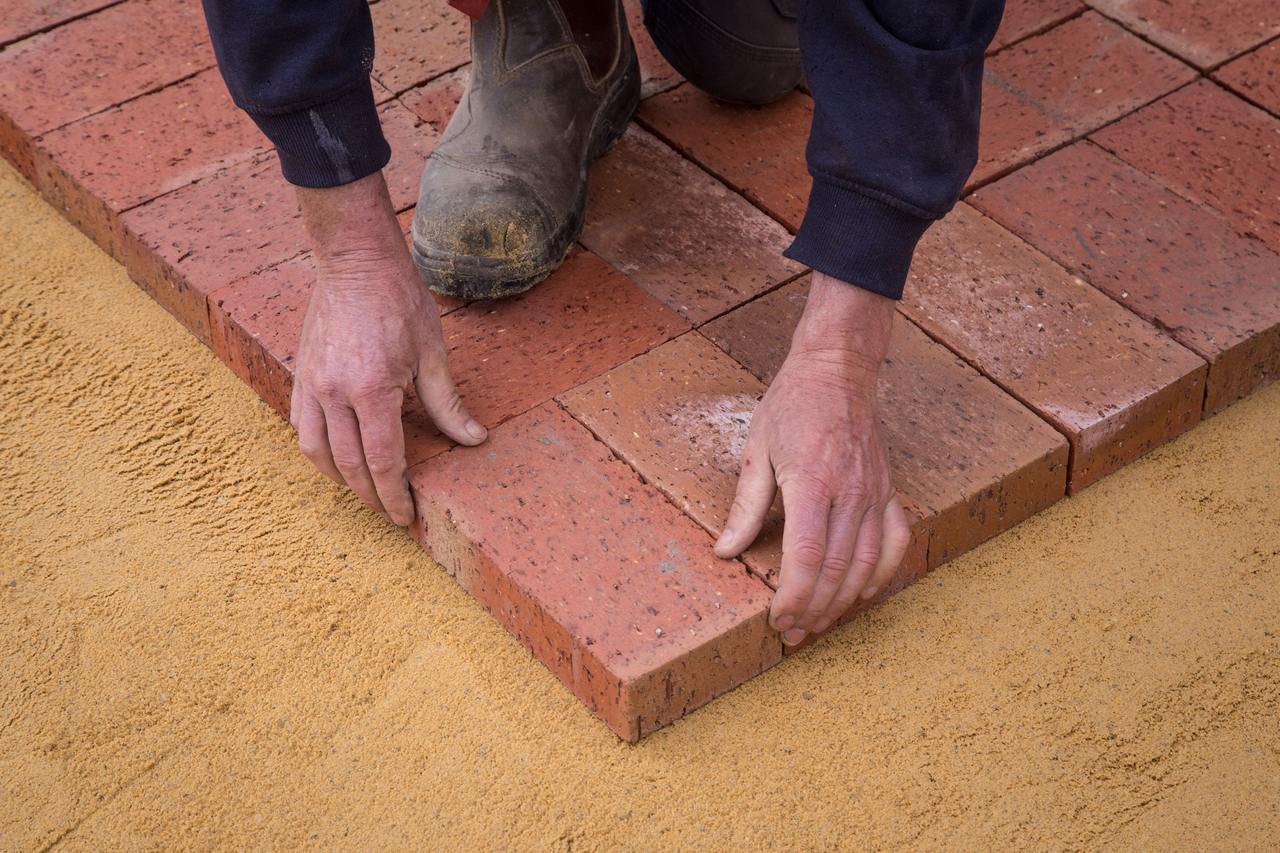
Usually, yes, and that’s why one patio spec doesn’t fit every yard in New Castle County. Clay and silt hold water, and water is what freezes and lifts.
The Delaware Geological Survey puts the Fall Line, where northern Delaware’s hills give way to flat ground, roughly along Kirkwood Highway. North of it, in Greenville, Hockessin, and Centreville, the old bedrock (in places the Brandywine Blue Gneiss that most of early Wilmington was built from) weathers into clay. South of it there’s more sand and gravel, though silty ground shows up on both sides.
We check the soil on the first site visit, and the base type and depth are spelled out in your proposal. Where we find clay, the base usually goes deeper, and the drainage plan does more of the work. On sandier ground, it comes down mostly to compaction and holding the edges.
No. Measuring, design, and choosing stone happen at a kitchen table or on a dry afternoon, and the build itself can run into January.
One homeowner put it to PJ this way: “My husband said this spring we’re going to get a patio done, and then summer hit. We just shelved it. So I want it now so it’s ready for next year.”
She had it right. A patio that goes in this fall or early winter is ready the first warm weekend of spring. If the ground freezes first, the design is done and the job keeps its place on the schedule. We book jobs in the order they come in, and if weather stops one partway through, we finish it before moving to the next.
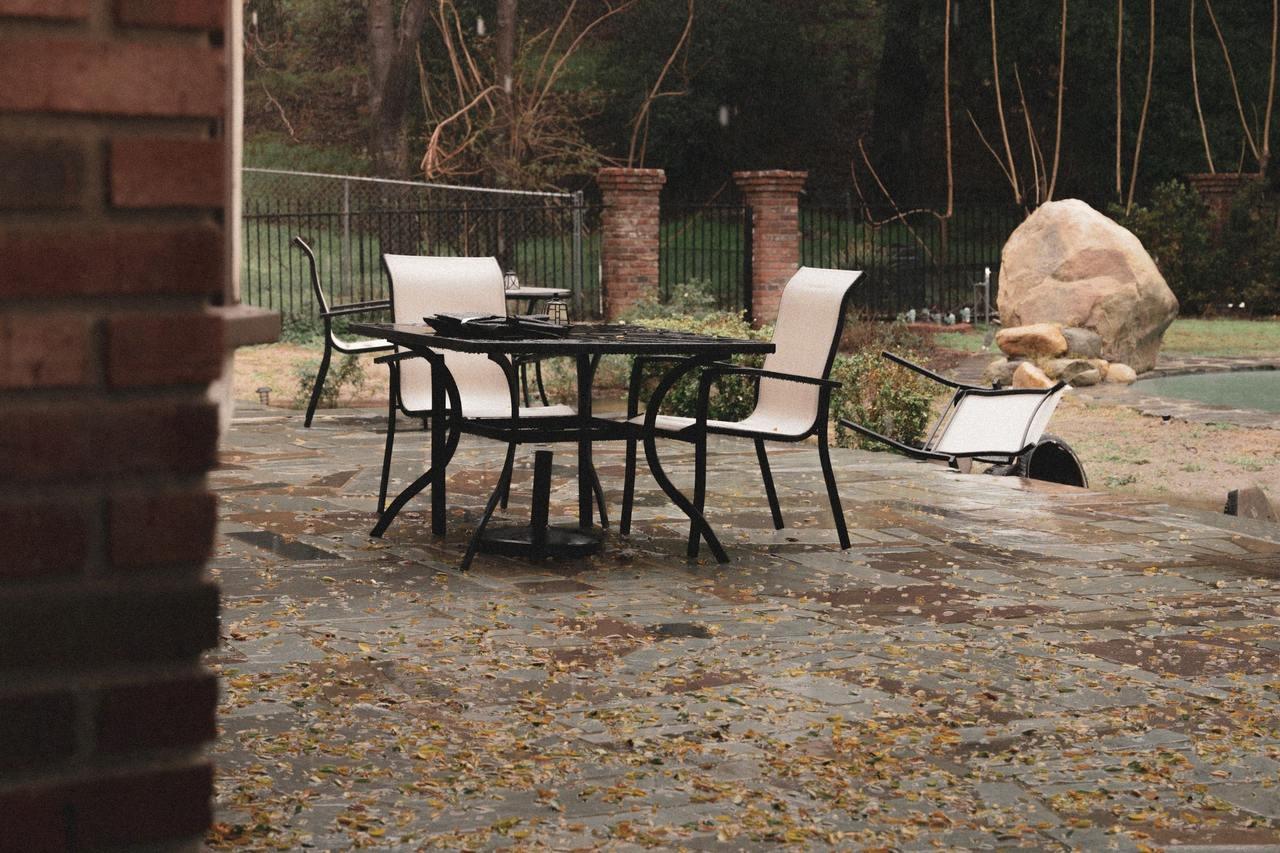
We start by walking the yard with you. Water, soil, and the big tree roots tell us most of what the base needs.
We design it in-house, and our own hardscape crew builds it. Before anyone digs, we call 811 so the buried utility lines get marked. Delaware now requires at least three business days’ notice for that, so it goes on the schedule early. For private lines like a septic system or a well, we’ll go over where they run with you, and a plot plan helps if you have one.
We keep building into winter until the ground freezes. After that, it’s design and scheduling for spring.
If a patio is on the list for next spring, now’s when it goes on our schedule. Call (302) 661-1950 or reach us at atlanticlandscapes.com/contact/ and we’ll come walk the yard.