
- Fall beats spring for planting here. Cool air over warm soil sends a plant’s energy into roots instead of leaves.
- Evergreens are the exception. UD Cooperative Extension says they don’t put out much root growth in fall, so those wait for spring.
- Skip the fall pruning. Early-fall cuts push soft growth that won’t harden before frost, and on lilac and forsythia they take next May’s flowers with them.
- Mulch the leaves into the turf. Up to six inches at a time, per Michigan State research.
Soil holds summer heat long after the air gives it up. That gap is the whole reason fall works. When the air is cooler than the ground, a plant sends its energy into roots instead of leaves, so less water goes out through the foliage, and more growth happens at the root ball. Weed pressure is lower than it is in spring, too. The Morton Arboretum describes the same conditions as low transpiration and high root growth potential.
Sue Barton, the ornamental horticulture specialist at UD Cooperative Extension, puts Delaware’s window through mid-October, sometimes to the end of the month. That’s later than the New England and Midwest guidance that turns up in most search results, and it’s the number that applies here.

Evergreens don’t follow the rule. They don’t generate much root growth in fall, so rhododendron, yew, and the conifers go in come spring. Small perennials are the other holdout. They don’t root deeply enough by November to survive being heaved out of the ground over winter.
Water is the part that matters this fall. Delaware’s statewide Drought Watch is still in effect. July brought the first above-normal rainfall month since July 2025, but the twelve-month deficit still ran 11.5 inches, and groundwater is sitting below normal, according to the Delaware Climate Office. The surface has recovered. What’s underneath hasn’t caught up.
So anything new gets watered. University of Maryland Extension’s guidance is to check daily for the first two weeks, then weekly after that, watering whenever the soil is dry six inches down. Two years, not two months.
Almost all of it waits.
UD Extension is blunt about it: don’t prune early in fall. A cut now pushes out soft new growth that won’t harden off before the first frost, and that growth is what winter kills. The dormant season is when you want to be in there anyway, once the leaves are down and you can see what a plant is doing.
Lilac and forsythia are where fall pruning costs the most. They set next spring’s buds on old wood, so anything cut in October is May’s flowers. Early-flowering shrubs get pruned right after they bloom.
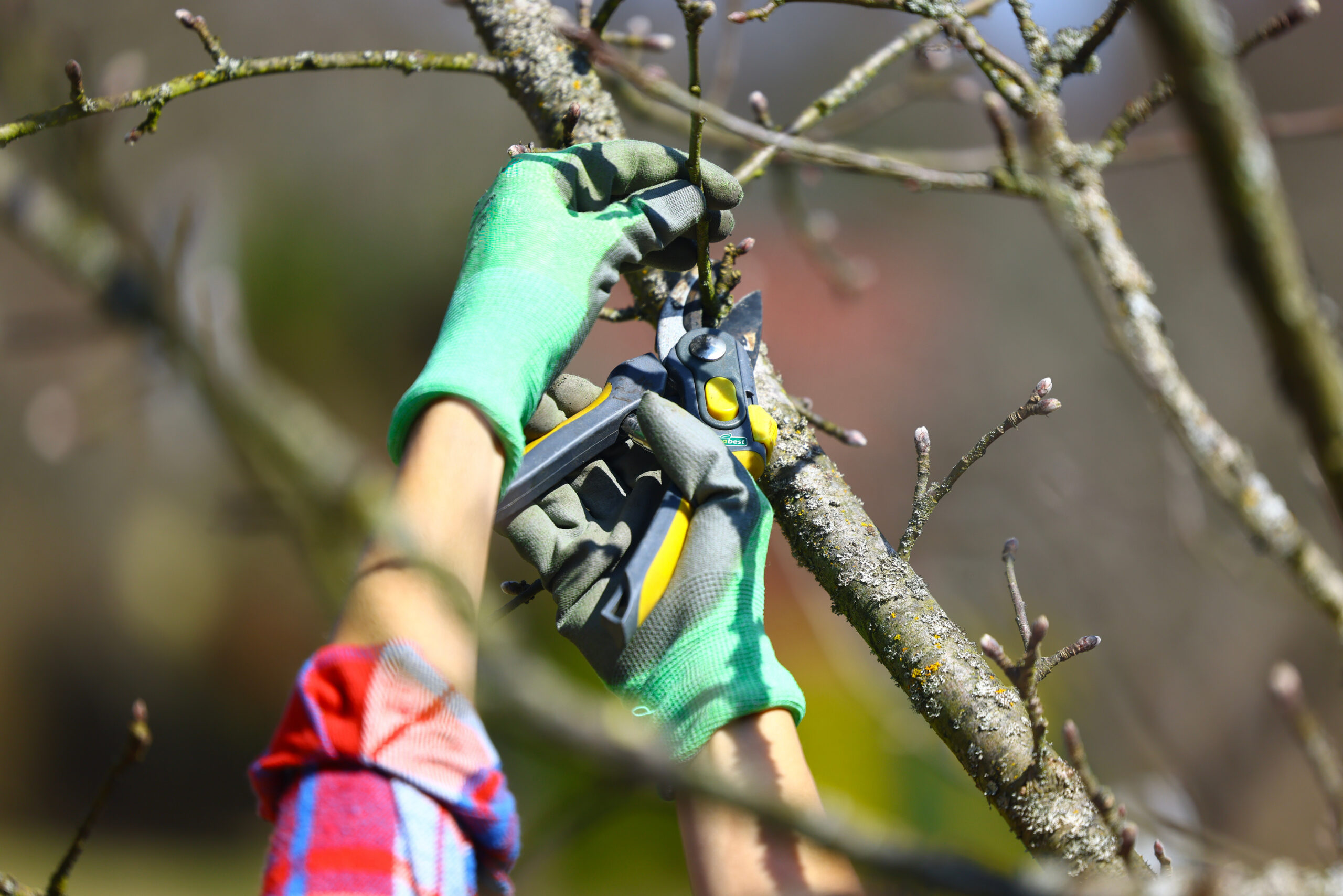
Dead, diseased, broken, or injured branches come out any time of year. That one has no season attached to it.
The rest waits for late winter. Shaping, thinning, the cuts that make a yard look designed instead of just mowed.
A mature oak or beech is the one thing in a yard you can’t replace with a check. Everything else gets rebuilt, replanted, or regraded in a season.
Trees don’t report stress on schedule. UMass Extension notes that drought symptoms “may not be evident for weeks, months, or years after the drought event.” A tree that struggled through a dry stretch can look completely normal the following fall.
Walk the yard and look hard at the specimens you’d hate to lose. Browning along the leaf edges. Dieback at the branch tips. Leaves dropping earlier than the trees around them. Any of that on a mature tree means getting eyes up in it, not a look from the lawn.
Stressed trees are also easier for borers to get into. A healthy tree pushes out enough resin to shut a borer down before it establishes. A drought-stressed one produces less of it, and attacks go up accordingly.
Mulched in, mostly.
Shredded leaf litter breaks down into the soil and feeds the turf. Michigan State research found that up to six inches of leaves can be mulched in at a single mowing, depending on the mower. That’s six inches per pass through the season, not six inches allowed to pile up and dealt with once in November.
Heavy drop may need a second pass. Slightly damp leaves shred fine and keep the dust down, while soaked ones bog the deck and come out in strips instead of pieces.

Beds are a different question. Leaf litter sitting in a planting bed insulates the soil and breaks down on its own, so there’s less reason to strip it out than most people assume. Whatever does have to go goes to a hauler or a drop-off site. Delaware banned yard waste from its landfills back in 2007.
We start by walking the place. What’s planted, what’s stressed, what’s structural, and what a previous crew topped that can still be grown back out.
From there, the list is usually short. Plantings in before the window closes. Pruning moved to February. A watering schedule for anything new, which carries more weight this year with groundwater where it is. Beds mulched where the soil needs the insulation.
The yards that look effortless in April are the ones where somebody did the unglamorous work in October.
Planting season runs through mid-October in most Delaware years. If you want something in the ground this fall, or a read on a tree that came through the summer looking tired, call and we’ll walk it with you.
Do I still have to water if I plant in the fall?
Yes. Daily for the first two weeks, then weekly for two years, whenever the soil is dry six inches down.
Will I see anything before winter?
Not above ground. The growth is all happening at the roots, and it shows up in next spring’s flush.
A limb came down. Does that wait until February?
No. Broken, dead, and damaged wood comes out whenever you find it.
Do the leaves need to come out of my beds?
Not usually. Leaf litter in a bed insulates the soil and breaks down on its own.