- Delaware’s fall lawn-seeding window runs August 15–September 30.
- New Castle County’s average first frost lands November 1–10. Count back six weeks, and late September is the real deadline for planting new trees and shrubs.
- DNREC’s open burning ban lifts October 1, allowing limited brush and branch burning, 8 a.m.–4 p.m., through April 30. Leaves and grass clippings stay off-limits to burn year-round.
- Fall is the primary fertilizing season for Delaware lawns.
By mid-August, the worst of the heat stress on Wilmington-area cool-season lawns starts to break. Penn State Extension names late summer into early fall as one of the two cool-weather windows for core aeration (early spring is the other). Pulling small plugs of soil relieves the soil compaction and thatch, a layer of dead grass, that builds up over a season of heat, foot traffic, and mower passes.
Overseed right behind the aerator, while the holes are still open. University of Delaware Cooperative Extension puts Delaware’s best seeding window at August 15 through September 30: warm soil for fast germination, cooler air so new seedlings aren’t fighting heat stress, and less weed competition than a spring seeding faces. New grass needs daily moisture for about three weeks, until it reaches an inch and a half tall.
Tall fescue is the recommended species for most Delaware yards, often blended with a little Kentucky bluegrass, and if that’s your lawn, this is the one repair window that actually works. Wait until spring, and you’re seeding into weed pressure and summer heat before the grass has had a real chance to root.
Once Delaware’s mid-summer no-fertilize window (Delaware’s Livable Lawns program recommends none between June 16 and August 14) has just closed. Fall is when a cool-season lawn actually puts nitrogen to good use. Instead of fueling leaf growth the way a summer application would, it channels nitrogen into roots and energy reserves, exactly what the grass needs heading into winter.
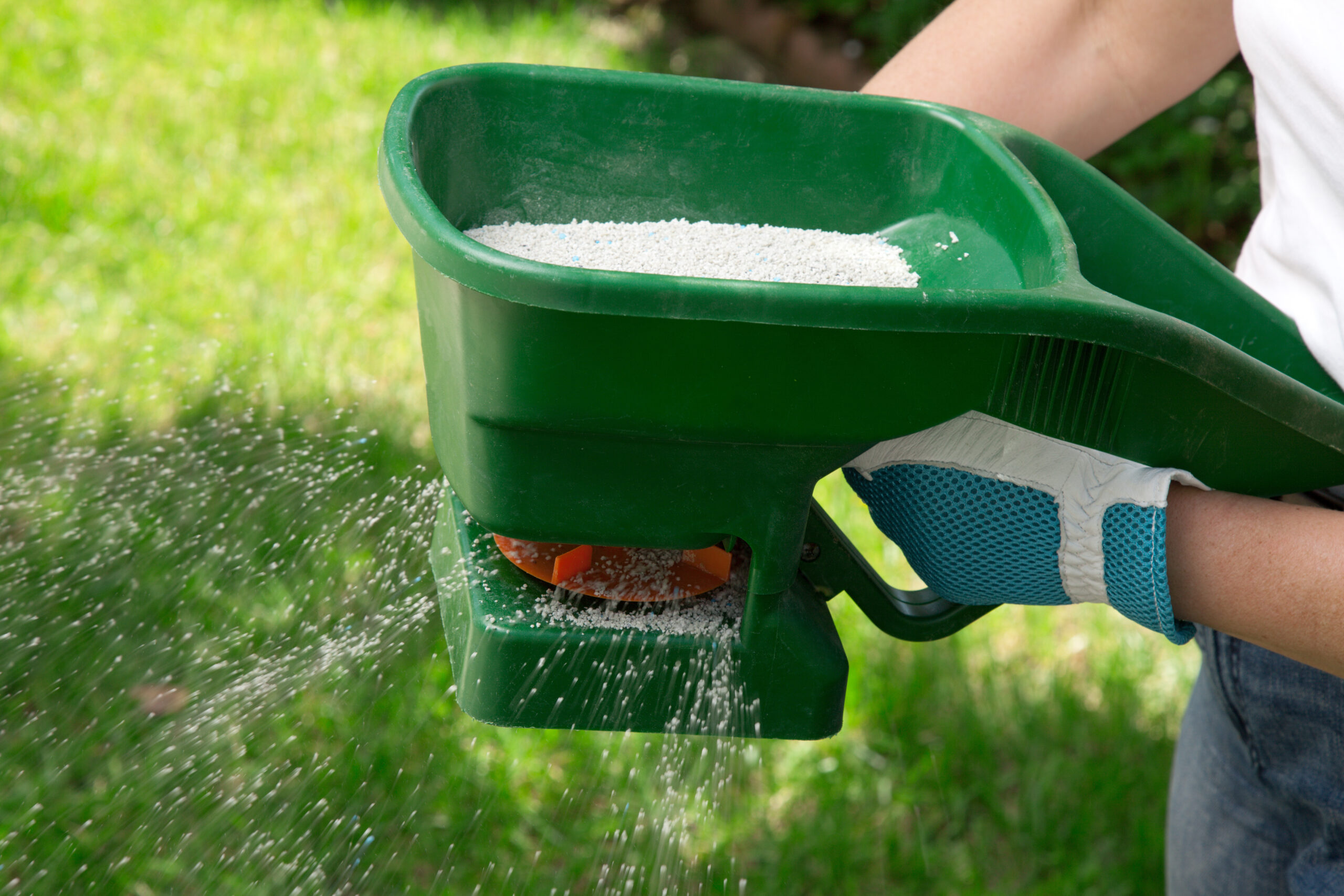
University of Delaware Cooperative Extension recommends 1 to 2 pounds of nitrogen per 1,000 square feet, applied twice: once from mid-August through mid-September, and again between October 1 and November 1. If two applications is more than you want to manage, UD Extension horticulture specialist Sue Barton notes that a single slow-release application in September, at 2 pounds of nitrogen per 1,000 square feet, gets you most of the same benefit.
A soil test is worth doing before you buy anything. Delaware soils frequently already have enough phosphorus, and some neighborhoods require phosphorus-free fertilizer specifically to keep runoff out of local streams. It’s the same water-quality reasoning behind the summer no-fertilize window.
Not yet, but the window has a real edge to it. Penn State Extension puts the rule at a minimum of six weeks before the first frost, to give roots time to establish before the plant goes dormant for winter. New Castle County’s average first frost lands November 1 to 10, based on 1991–2020 climate normals. Count backward, and late September is the practical deadline for new trees and shrubs.

It’s also when nurseries mark inventory down, which is part of why “fall is for planting” isn’t just a gardening slogan. Once a new tree or shrub is in the ground, water it weekly through fall and lay mulch over the root zone. That mulch layer is what keeps a young plant from heaving out of the ground during the freeze-thaw cycles typical of Delaware winters here in USDA Zone 7b (7a persists only in inland pockets like Hockessin).
Spring bulbs (daffodils, tulips, crocus) are the exception to the deadline. They actually prefer cool soil, so you have until the ground firms up in late November to get them in.
Burning isn’t one of the options, whatever the season. DNREC is direct about it: leaves and grass clippings can’t legally be burned in Delaware at any time of year. What does open up on October 1 is brush. Once Delaware’s ozone-season burning ban lifts, residents can burn cut branches, limbs, and shrubbery, up to 27 cubic feet at a time, between 8 a.m. and 4 p.m., through April 30. Patio fire pits and chimeneas remain fine year-round, same as they were all summer.
For the leaves themselves, the practical options are mulch-mowing them back into the lawn in thin layers (they break down and feed the soil instead of leaving your yard), bagging for pickup, or municipal collection. Newark, for one, runs a loose-leaf program (no bags, just raked into the strip between sidewalk and curb) from the second Monday of October through the end of December. Other municipalities across New Castle County run their own seasonal programs on similar timing, so check with your local public works department for the exact schedule.

Fall is when our maintenance visits shift focus. We’re recalibrating mowing height and frequency as growth slows, refreshing mulch in beds before the ground cools further, and, for clients on our lawn care program, timing fertilizer applications to hit the windows above instead of guessing.
We’re also looking at what a summer of heavy storms left behind. It’s the right time to check drainage and clear anything that leaf litter is starting to clog before winter rain and snowmelt test it. We’re DNREC Blue Card certified in sediment and erosion control, with direct experience maintaining stormwater ponds, drainage basins, and sand filters for New Castle County properties.
If you built a patio or fire pit with us this summer, fall is when you’ll get the most use out of it. Cooler evenings are made for a fire pit. And if this is the season you’re finally putting in the trees, shrubs, or bed redesign you’ve been thinking about, our design-build team can still get it done before the six-week planting deadline, but that conversation needs to start now, not in October.
The planting deadline and the fall fertilizing windows are both real, and both are already ticking. Reach out to our team, and we’ll walk the property, look at what the lawn and beds actually need, and put together a plan that fits the calendar you’ve got left.