
- Delaware’s cool-season grasses (tall fescue, bluegrass) naturally slow and go semi-dormant in July heat — a grey or brown lawn isn’t always a dying one.
- The University of Delaware’s Livable Lawns Program recommends no nitrogen fertilizer from June 16 to August 14 to prevent nutrient runoff into local waterways.
- Water deeply and infrequently — 1 to 1.5 inches, two or three times per week. Daily light watering keeps roots shallow and heat-vulnerable.
- Summer storms reveal drainage problems that stay hidden in spring. Wet spots, bed erosion, and water near the foundation are worth noting now, not later.
Delaware lawns are almost entirely cool-season grasses, tall fescue, Kentucky bluegrass, or a blend of both. According to the University of Delaware Cooperative Extension, tall fescue is the recommended species for most residential and general-use settings in the state, with five to ten percent Kentucky bluegrass added in high-traffic areas.
The problem is that Delaware summers are hard on these grasses. The USDA places northern Delaware in Hardiness Zone 7a, a climate defined by cold winters and hot, humid summers. When soil temperatures climb above 85 to 90°F in July and August, cool-season grasses slow down and can enter semi-dormancy. A lawn that turns brown or develops a grey-blue tint and recovers slowly when you walk on it isn’t necessarily failing. In most cases, it’s conserving energy.
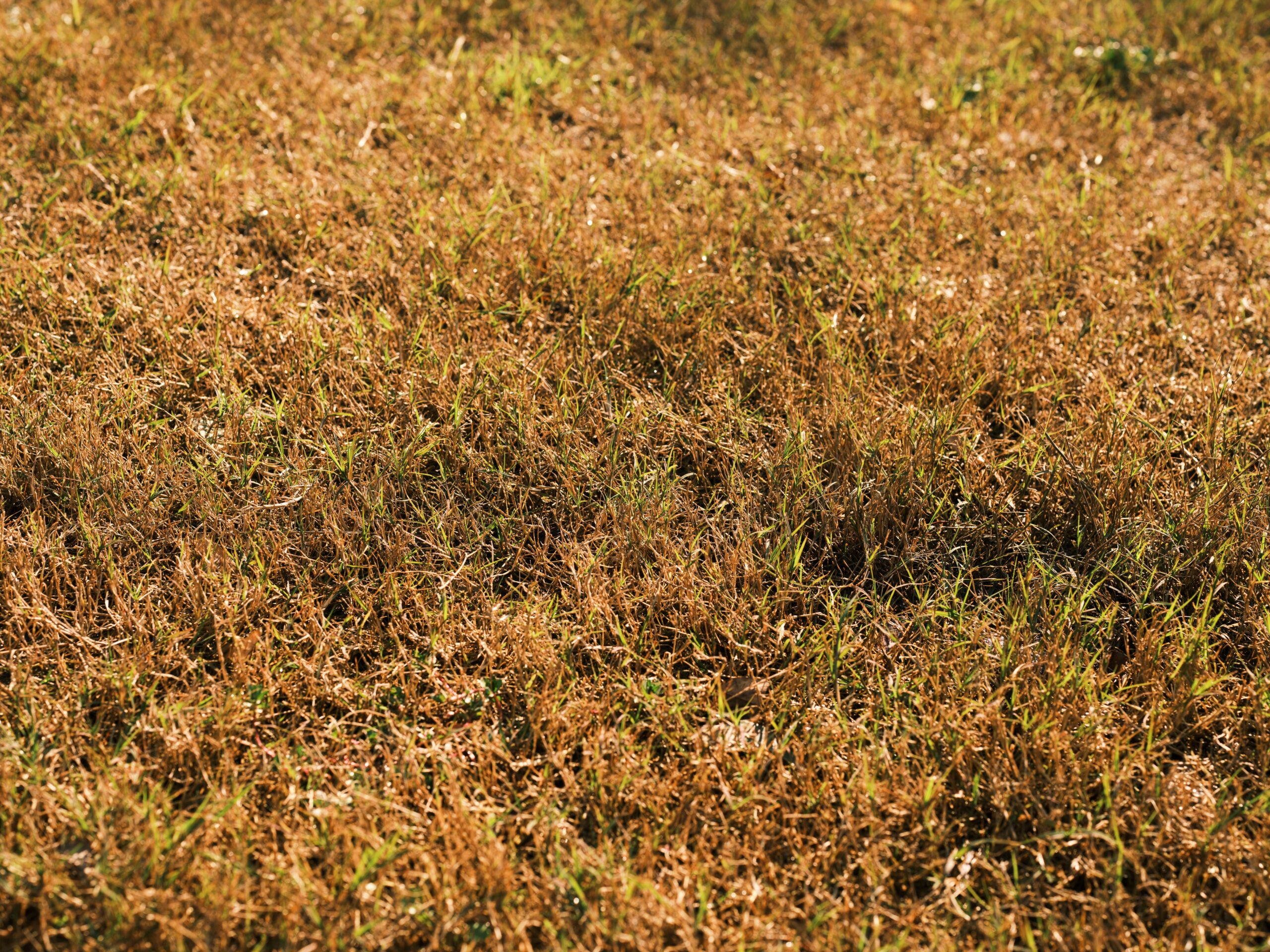
The tell between dormancy and actual damage is soil moisture and pattern. A dormant lawn is uniform and manages heat. A disease problem looks different: brown patch, which peaks during Delaware’s humid summer nights, shows up as irregular dark-edged rings that don’t respond to irrigation. Dollar spot shows small, bleached patches scattered across the lawn. If either of those patterns sounds familiar, that’s worth a closer look before fall.
The instinct in July is to do more, water more, fertilize more, and mow more. The research says the opposite.
Mowing: Raise your deck. Research from Penn State Extension’s turfgrass program shows that turf mowed at 4 inches retains significantly more soil moisture and maintains cooler soil temperatures than turf mowed at 2 inches during summer stress periods. Keep it at 3.5 to 4 inches until temperatures consistently drop below 80°F.
Watering: Water deeply and infrequently. The standard for a Delaware summer is 1 to 1.5 inches two or three times per week, not daily light watering, which keeps roots shallow and makes the lawn more vulnerable when heat peaks. Automatic irrigation systems set and forgotten in spring are often the culprit. Your lawn is telling you it needs water when about 30 to 50 percent of the blades wilt, the color shifts toward grey or blue-green, and footprints in the grass linger longer than they should.
Fertilizing: Don’t. The University of Delaware’s Livable Lawns Program recommends no nitrogen fertilizer between June 16 and August 14. The reason is both practical and environmental: a heat-stressed cool-season lawn can’t process nitrogen efficiently in summer, and applying it depletes the carbohydrate reserves the grass needs to push through August and recover in fall. Nitrogen and phosphorus running off into Delaware’s waterways is exactly what the program is designed to prevent. Wait until late August to early September, when the grass is actively growing again.

Beds take a different kind of stress in July than the lawn does. Heat accelerates evaporation, dry spells stress shallow-rooted annuals and perennials, and heavy summer storms compact bare soil and erode bed edges.
Mulch is your primary tool right now. A 2 to 3-inch layer of organic mulch reduces evaporation from soil by up to 70 percent compared to bare ground, and keeps soil temperatures lower in the root zone. If your beds are running thin, with less than an inch of mulch showing, that gap is costing you during the July heat. Apply to evenly moist soil, and leave a gap around the base of plants to prevent moisture-related rot at the crown.
Read what the plants are telling you. Yellow leaves can mean overwatering, underwatering, or a nutrient gap; context matters. Browning at leaf edges typically points to dehydration, poor drainage, or pest pressure. Dark or water-soaked spots on foliage usually signal fungal or bacterial infection. Leaves dropping outside of seasonal patterns mean something changed in the environment: a recent heat spike, a drainage shift from a new storm pattern, or compacted soil that’s blocking root access.
Deadhead and cut back as needed, not aggressively, but enough to keep spent blooms from diverting energy away from root development heading into late summer.
Here’s the part of a mid-summer landscape check homeowners most often skip: drainage.
Spring rain is gentle and steady. Delaware summer storms are different, intense, short, and heavy. They hit fast and test every drainage pathway on your property at once. Those storms don’t create drainage problems. They reveal ones that were already there.
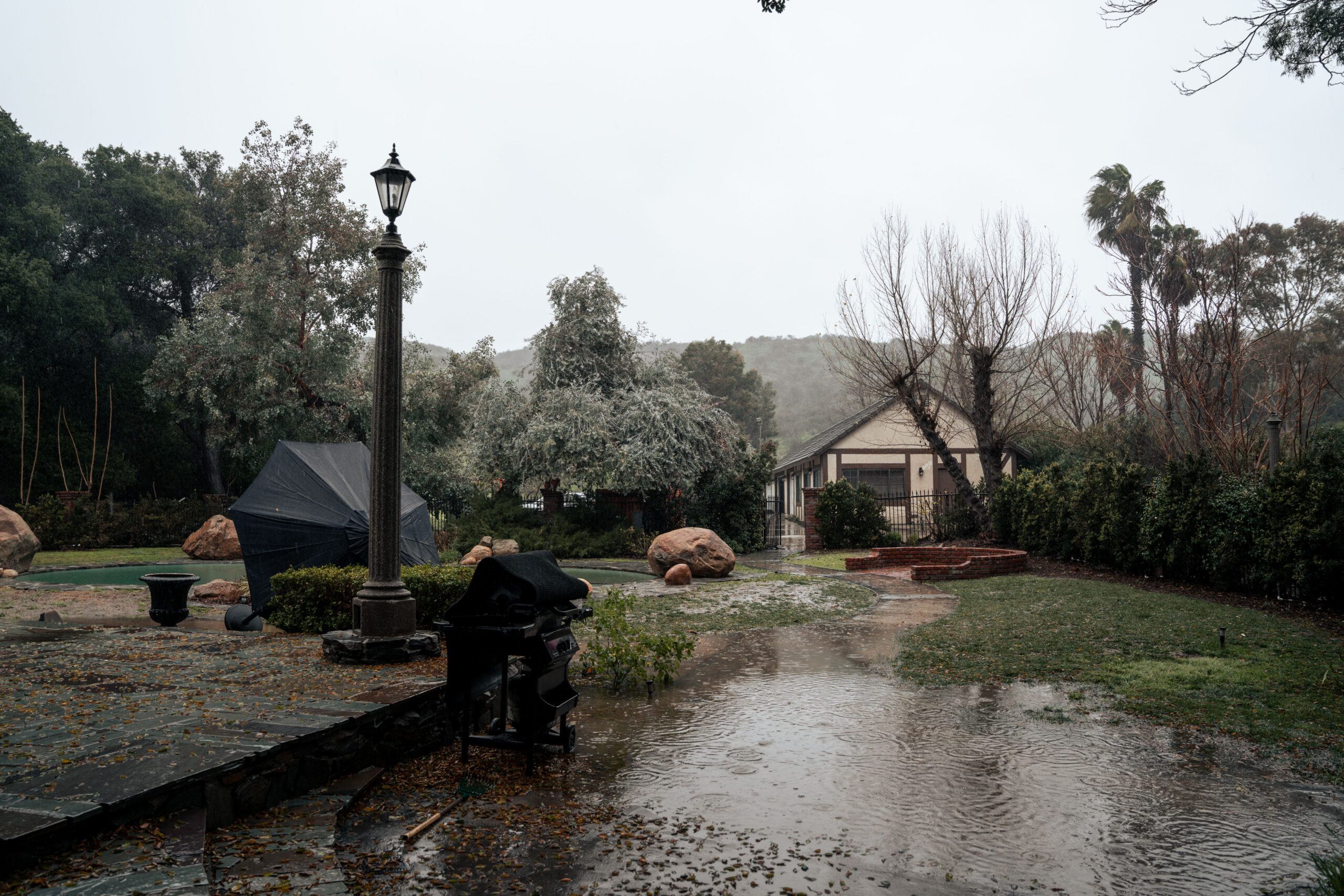
If you’re seeing wet spots in the lawn that take more than 24 hours to drain, erosion forming at bed edges, water moving toward the foundation rather than away from it, or a low section of the yard that consistently puddles — those are flags worth taking seriously before fall planting or any hardscape work begins.
DNREC notes that drainage is a critical land use consideration across Delaware because most of the state sits on relatively flat ground with a naturally high water table. The department maintains a Drainage and Stormwater Assistance line at 302-855-1955 (dnrec_drainage@delaware.gov) for homeowners with runoff or standing water concerns, a useful first call if you’re not sure whether what you’re seeing is a property-level issue or touches a shared drainage system.
Our maintenance programs start with a property walk, not a checklist handed over the phone. We’re looking at what the lawn is actually doing, where beds need attention, how drainage is moving, and what the soil is telling us after a summer of heat and storms.
For lawns, that means mowing at the right height for the season, irrigation review calibrated to Delaware’s summer watering windows, and timing any fertilization to hit when cool-season grasses are ready, late August into fall, not now.
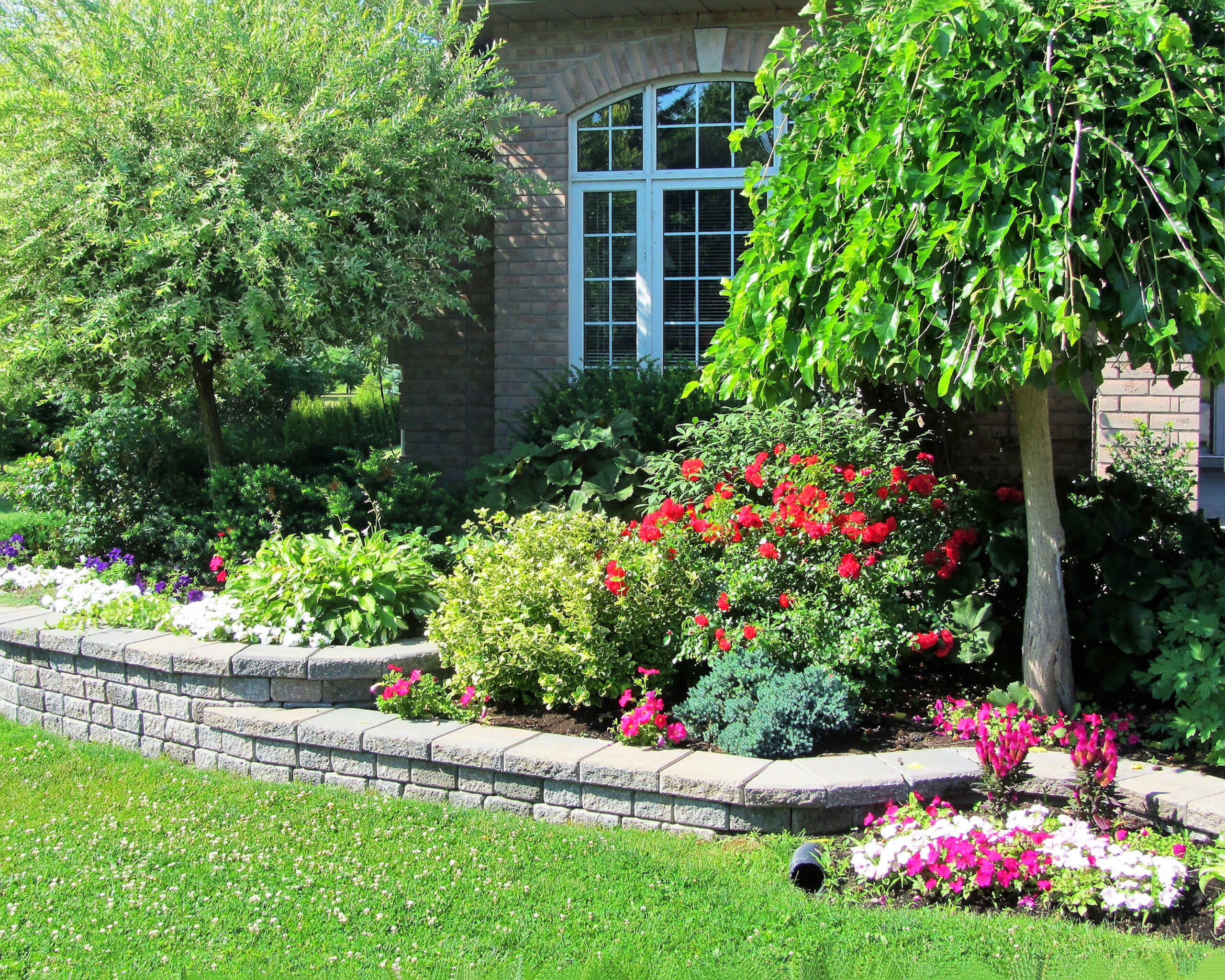
For beds, we’re managing mulch coverage, monitoring for disease and pest pressure, cutting back what needs it, and flagging anything that looks like a drainage or soil issue that goes deeper than the surface.
For drainage and stormwater, our team is DNREC Blue Card certified in sediment and erosion control. We have direct experience working with New Castle County and DNREC on maintaining, repairing, and renovating stormwater ponds, drainage basins, and sand filters. That certification isn’t a detail; it’s the difference between a contractor who can manage a regulated site and one who can’t. More at atlanticlandscapes.com/storm-water-facilities.
Mid-summer is exactly when a property walk is most useful, you see the lawn under heat stress, beds mid-season, and drainage patterns after summer storms. Reach out to our team, and we’ll schedule a walk, talk through what we’re seeing, and put together a plan.